
Table of Contents
TensorFlow is an end-to-end open source platform for machine learning. It has a comprehensive, flexible ecosystem of tools, libraries and community resources that lets researchers push the state-of-the-art in ML and developers easily build and deploy ML-powered applications.
Why is TensorFlow the Most Popular Machine Learning Framework?
Since its first release in 2015, TensorFlow has grown to become the world‘s most popular machine learning framework.
According to a recent survey, over 70% of data scientists and ML practitioners now use TensorFlow. It has also become the top machine learning repository on GitHub with over 200,000 commits!
So what makes TensorFlow so popular?
Easy Model Building: TensorFlow provides developer-friendly APIs like Keras to swiftly build neural network models layer-by-layer without math heavy code.
Distributed Training: TensorFlow models can seamlessly train across thousands of GPUs on Google Cloud. This makes training huge models faster.
Easy Deployment: TensorFlow models can run on server farms, desktops, mobiles and browser apps. This makes deployment to production easy.
Research: TensorFlow‘s differentiable programming enables creating very deep neural networks for state-of-the-art research.
Community: TensorFlow has huge community support in terms of libraries, tutorials, guides and discussion forums.
Google Support: Being Google‘s official machine learning platform ensures TensorFlow keeps up with latest ML advancements.
Now that we know TensorFlow is undoubtedly the leader – let‘s understand it in more detail.
Introduction to TensorFlow
TensorFlow is an end-to-end open source machine learning platform. It has tools, libraries, and resources that enables:
- Building and training ML models
- Serving predictions to applications
- Advanced machine learning research
TensorFlow was created by the Google Brain research team to conduct cutting-edge research in neural networks and related domains.
It was first released in 2015 under the Apache 2.0 open source license. This allows anyone to freely use, modify and distribute TensorFlow without paying anything.
Today, TensorFlow powers Google products used by billions of people like Gmail, Google Photos and Google Cloud. It also provides fundamentals for latest innovations like self-driving cars, speech recognition, recommender systems and more.
Beyond Google, major companies using TensorFlow in production includes Uber, Airbnb, Twitter, eBay, SAP, IBM, Intel, AMD, NVIDIA, Qualcomm, Oracle and thousands more.
Let‘s highlight some of the notable features that makes TensorFlow the backbone for real-world machine learning.
Why Use TensorFlow? Key Features
Easy Model Building with Keras
TensorFlow provides multiple APIs for easily building machine learning models:
- Low Level Core TensorFlow API provides complete programming control
- Keras API provides a simpler high-level interface for fast iteration. It is fully compatible with TensorFlow 2.
For example, here is how you can build a simple neural network model with just a few lines of code using Keras:
from tensorflow import keras
from tensorflow.keras import layers

model = keras.Sequential()
model.add(layers.Dense(10, activation=‘relu‘, input_shape=(32,)))
model.add(layers.Dense(5, activation=‘softmax‘))
As you can see, the Keras API makes building, altering and iterating on models very fast without all mathematical complexities. This simplicity and flexibility contributed to the rapid adoption of TensorFlow in the industry.
Advanced Libraries for ML Research
While Keras makes model building easy, TensorFlow offers configurable lower level APIs for advanced research:
-
Eager Execution: Enables writing TensorFlow code imperatively like NumPy/Pandas for faster experimentation. Models run immediately without graphs.
-
tf.data API: Build complex input data pipelines for efficient loading, preprocessing and feeding data to models.
-
tf.distribute API: Distribute training across multiple GPUs and servers to accelerate research experiments.
These capabilities powered cutting edge innovations like AlphaGo, speech recognition, neural machine translation, image captioning etc.
Easy Deployment of Models in Production
Running open-source machine learning models in production evironments at scale used to be challenging before TensorFlow.
Today, TensorFlow makes deploying ML models to real-world applications easy with:
-
TensorFlow Serving: A flexible server to deploy trained modelsaccessible via network requests without changing code. Supports versioning, scaling etc.
-
TensorFlow Lite: Enables deploying models on mobile and edge devices with optimized footprint. Supports iOS, Android, Raspberry Pi, browsers and more.
-
TensorFlow.js: Enables running ML entirely in the browser by converting Python models into JavaScript apps using TensorFlow.js with no code changes.
So TensorFlow has you covered to swiftly go from ideas to implementation powered by machine learning.
Next, let‘s look under the hood to better understand TensorFlow architectural fundamentals.
TensorFlow Architecture
TensorFlow follows a unified dataflow graph programming paradigm. The core data structures in TensorFlow are Tensors and Graphs.
Here are the key components of TensorFlow‘s system architecture:
Dataflow Graphs
The foundation of TensorFlow is building dataflow graphs. A Graph contains a network of nodes, each representing operations, connected by edges that represent multidimensional data arrays i.e Tensors.
This computational graph concept enables a common framework that encapsulates both model computation and state making parallel computing across platforms seamless.
For example, this is a simple dataflow graph to add two numbers:
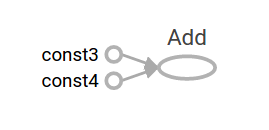
The tf.add operation adds the input Tensors while edges carry forward the computed output.
TensorFlow Core
TensorFlow Core provides the foundation for all computations. It enables expressing programs as Graphs manually for total flexibility or through higher level APIs like Keras for simplicity.
It powers all major algorithms and utilities needed for machine learning like:
- Math operations using Optimizers for computing gradients
- Neural Network Layers for models like CNN, RNN, LSTM
- Loss functions to quantify model prediction quality
- Datasets for ingesting training data
- Training mechanisms like checkpointing, summaries and queues
TensorFlow Core handles all the complex distributed execution of the computational Graphs across heterogeneous systems backends transparently.
It uses Python for expressing machine learning algorithms easily with wrappers available in other languages too.
Accelerator Support
While TensorFlow Core provides portability between platforms, to achieve high performance you can execute computations on specialized hardware accelerators:
-
GPU: TensorFlow programs can execute on Nvidia and AMD GPUs using CUDA and ROCm langauges transparently for massive speedups. Just specify device type as GPU.
-
TPU: TPUs are custom Google ASIC chips optimized exclusively for ML workloads providing up to 100x faster training times and low latency serving.
-
Environments: Managed ML environments like Google Cloud AI platform enable launching TensorFlow containers on VMs with pre-configured accelerators.
So TensorFlow is designed for both portability and performance across systems. Next, let‘s go through the steps to actually run machine learning models with TensorFlow.
Machine Learning Models with TensorFlow
The end-to-end workflow for running machine learning experiments with TensorFlow includes:
1. Import Data: Ingest datasets from CSV, NumPy etc. and use Datasets API for manipulation
2. Build Model: Design neural network models via high level Keras APIs
3. Train Model: Run computations across batches of data to fit model parameters
4. Evaluate Model: Assess trained model quality through metrics monitoring
5. Improve Model: Alter model architecture, add layers or tune hyperparameters based on evaluation
6. Export Model: Save final trained models, weight configurations and assets to files
7. Deploy Model: Serve exported production-ready model for clients to consume predictions
So TensorFlow covers the full life cycle helping you effectively turn ideas into ML powered products.
Let‘s go through a quick hands-on example.
Simple Machine Learning Example
Let‘s create and train a simple LINEAR REGRESSION model step-by-step with TensorFlow 2.x high level Keras API:
1. Import Libraries
import numpy as np
from tensorflow import keras
from tensorflow.keras import layers
2. Generate Input Data
xs = [-1.0, 0.0, 1.0, 2.0, 3.0, 4.0]
ys = [-3.0, -1.0, 1.0, 3.0, 5.0, 7.0]
3. Define Model
model = keras.Sequential([
    layers.Dense(units=1, input_shape=[1])
])

model.compile(loss=‘mean_squared_error‘, optimizer=‘sgd‘)
4. Train Model
model.fit(xs, ys, epochs=500) 5. Predict
print(model.predict([7.0])) # [[11.0]]And we have now built, trained and inferred with a simple TensorFlow model in just 5 steps without writing any mathematical computation code!
Let‘s now look at some real world examples of TensorFlow.
Powering Innovation with TensorFlow: Real-World Examples
TensorFlow is enabling advancing ML research and powering innovations across multiple industries:
Healthcare
- DeepMind uses TensorFlow to analyze medical scans and detect diseases earlier. This could save many lives.
Financial Services
- PayPal uses TensorFlow for fraud detection saving millions in losses.
- TensorFlow helps banks analyze economic trends for smart investing.
Transportation
- Uber uses TensorFlow for object detection in self-driving ride-sharing cars to prevent collisions. This can enable safe, affordable autonomous transportation.
Media
- Spotify employs TensorFlow recommendation models to suggest music listeners might enjoy.
- YouTube uses TensorFlow content matching models to improve video suggestions quality.
Telecommunications
- Cisco utilizes TensorFlow in networks for network load optimization, bandwidth allocation improvements and anomaly detection.
As you can see, TensorFlow applications span across domains demonstrating real business and human value.
Hope you got an overview understanding this popular machine learning framework! Let‘s summarize the key takeaways:
Summary
- TensorFlow is undoubtedly the world‘s most popular platform for production machine learning used by over 70% of data scientists.
- It uses automatic differentiation for faster experimentation.
- Keras API simplifies model building similar to Lego blocks enabling swift development.
- Deploying machine learning models at scale is simplified by TensorFlow Serving, TensorFlow Lite and TensorFlow.js
- All major machine learning workflows like data ingestion, model training/serving, metrics monitoring are easily enabled.
- Beyond great developer experience, TensorFlow powers most of the machine learning advancements and research breakthroughs demonstrating real-world human impact.
I hope this guide served as a comprehensive introduction explaining what TensorFlow is, why it is so popular and how you can leverage it to enable data-driven intelligent solutions. The documentation, tutorials and community provide ample resources to gain mastery over TensorFlow.
Let me know if you have any other questions!